


Go to content

2015-4 - C-Desk Technology

Skip menu
Skip menu
2015 - 4
Ideas to keep you alert at night
I'm writing a new book and need some help. It's called "The Office After Dark". It's about working at night. Working at night is not like working 9-5. As a night worker you are in grave danger of being bored out of your mind. The problem is that at night there is less work. So night workers often suffer from boredom and fatigue. So you need something to keep your mind active and alert.


Here is the list of things I have come up with so far. Any more ideas?
Knitting (only do if you are alone in the office, or the other people knit as well),
Crochet (easier than knitting and doesn’t have the sound problem),
  • Needlepoint (crew embroidery, applique, tapestry, cross stich or darning),
  • Poetry,
  • Sudoku or other puzzles,
  • Crossword,
  • Books (if you don’t get too engrossed, if you need to watch a screen you could always listen to audiobooks),
  • Cards (on the computer or others in the office),
  • Board games (on the computer or others in the office),
  • Jigsaws,
  • Learn a new language,
  • Study for exams,
  • Write a blog,
  • Ironing,
  • Exercise (yoga, Pilates, stretches, but don’t do anything where you could be injured),
  • Food preparation (could be more of a job, but you could make lunch for everyone on the day shift, or your family),
  • Read newspapers or magazines,
  • Personal correspondence,
  • Research you holidays,
  • Sort out your stamp collection,
  • Drawing (something you could pick up and put down without making a mess),
  • Chess,
  • Astronomy,
  • Jewellery making,
  • Genealogy,
  • Juggling,
  • Macrame,
  • Quilting,
  • Singing (providing no one can hear you),
  • Music (electronic instruments can have headphones so you don’t disturb anyone else),
  • Wood carving,
  • Magic,
  • Memorise batting averages (not for everyone but then you never know when it might be useful in a pub quiz),
  • Work on your memory palace,
  • World building,
  • Model making,
  • Yo-yoing,
  • Origami,
  • Lego Building,
  • Drama (learn your lines for an amateur dramatics group),
  • Cryptography,
  • Calligraphy,
  • Geocaching (you hide objects and then other people have to find them. This is a great way to connect with your colleges on another shift),
  • Computer coding (create your own software or create a best selling game),
I'm having a Bad, Bad Day
When you do a round robin at the last minute, trying to get somebody to come in and cover for an absent colleague, it ruins everybody's' day!
It ruins your day! I mean, who wants to call up people on their day off and ask them for a favour. It makes you look unprofessional and disorganised. It gives people leverage to use against you. "I was there for you last week when you needed someone at the last minute. So now I need Next Saturday off!"
It ruins the day of everybody you call too! They are off work, the last thing they want to think about or be reminded of is work, and you are calling them on their day off! There is the guilt of not being able to work the shift. What does that mean? Will it affect their pay, will it affect any promotion? How do you see them now because they turned you down? They were at home, happy. Now they are a wreck, angry at you for disturbing them yet afraid of the consequences!
And then there is the person who is willing to work on their day off at short notice. They thought they had a day off, now they are working. What does that mean for them, are they the saviour of the team, they stood up and did the work when nobody else would? Or are they the person who is taking all the overtime?
So you bit the bullet and covered this absence. Well done! What about next time? Who do you call? What is the order? Do you call the person who did it last time first because they are more likely to do it again? Does this open you up to bias and bullying allegations? Is this a fair system?
However sometimes you will fail. There will be no one willing to cover that Saturday Night shift. So what then. Does that mean that you have to go in and cover it. Or will the rest of the shift be forced to take up the slack. You will be working with one less person, so everyone will be over worked and stressed. But also you will fail to meet your deadlines and have falling profits.
This is not the Answer!
A round robin is an emergency measure. It is not a day to day tool to cover for absences. Emergency measures are expensive, they are to cover that 100 year flood, they are not there to be used every day. And if you are covering absence with a round robin, it will be an everyday event. Then what does that say to your shift workers? It says their time is not their own! It says that I can and will call you up every day, no day is a day off!
Positive Absence Cover
There is an alternative! You can have a fair, unbiased system that gives you peace of mind and your employees privacy. You employ an Absence Cover Arrangement. You can't stop people being ill, it is as investable as taxes. So a good manager plans for it.
The first step is to understand the scale of the problem. Your absence rate will tell you how often you will need to cover an absence and from this you can calculate how much you should budget for. My book Understanding Your Absence Rate available from Amazon will tell you how to convert your absence rate into the expected number off shift.
The second step is to have a cover arrangement for every contingency. So what do you do if one person is off? What do you do if two people are off etc.
The third step is your budget. There is no point in creating an absence cover arrangement if half way through the year you run out of money. So what is achievable and what is not? How much will it cost you to go short? When can you go short and when do you need a replacement?
The fourth step is to understand the tools at your disposal. The Round Robin is one. But not the best and definitely not for everyday use. So you can use cover shifts, extra staff on each shift, Banked Hours overtime, TOIL, flexible shifts and even combinations of these.
The fifth step is implementation. If you did all of your planning correctly then you will be covered for every contingency. But you don't want to be called at four in the morning because someone called in sick, you need to delegate. You need to have a system that will allow your staff to report in sick, then the procedure is followed so that the correct person comes in to cover.
The sixth step is recording and monitoring. Once you have your system in place, you then just need to monitor what happens and record the absences, and cover arrangements. To help you do this our software VisualrotaX will record all absences and allow you to keep track of everyone's hours, cover shifts and Banked Hours.


You can also view our video Proactive Absence Management Tips https://youtu.be/-9q3sLkcgxs


We are currently working on a new e-book Positive Absence Management, due to be released later this year. This e-book will tell you what tools are available for you to use to cover your absences. Then it will take you through step by step how to implement them. However if you need help before then please email us or call us on +44 1636 816466
Booking Holidays

This weekend I was reading “The Art of Coarse Travel” from 1957. This lovely book takes you back to a time before the internet when going abroad was a far cry from what it is today. Today we can research our chosen destination online. With the help of fellow travellers who have reviewed, blogged and posted on trip advisor we can make in informed decision about where to eat and stay.

This book on the other hand reminds us of a time when travel really was an adventure:

The friend who has recently been in Florence, but staying with friends, is another type of person whose words and hints should be received with caution. Only recently we were recommended to stay at the Albergo B. in Florence; when we saw it we noted expensive cars outside and the name in neon lights. We did not stay there, but when we returned to England we told our informant that we had been puzzled by his recommendation of such an obvious gin place.

“Gin place? But it’s a sort of poor students’ pension place."

“Well, it isn’t now, we can assure you.”

“Oh. Well, of cause, I haven’t stayed there since 1920.”

Today we all know the best and worst experience from each hotel. We can see pictures from every angle. Yet holidays still hold that same magic. The excitement as your plane takes off. Then the relaxation when you are sitting on the beach in the sun and know that this is the reason why you go into work. It was all worthwhile. All those hours spent at work preparing for your long deserved holiday. Not even the mountain of work awaiting you at the office when you get back can darken those sunny skies.

That is why holidays cause managers so much stress. How can you say no to someone’s holiday? What you need is a holiday management plan. A way of controlling how and when holidays are booked. So that everyone can enjoy their Zen time on the beach!
Shift Scheduling Software Top 100 Wishlist
When it comes to what do we want out of software we all have our own wish lists. And we all have those things about our current software we would like to change. Like why doesn't it make it easy to print out, why can't it do this automatically etc. When we are running and working on a shift pattern it is important to have a fair and easy system to run.
Here are some common requests when running a shift pattern:
  1. I want it to record sickness
  2. I want to know what my sickness rate is (easily)
  3. I want to know how much sickness everyone has taken
  4. I want to know when I am short staffed
  5. I want it to record holidays
  6. I want to know how much holiday everyone has taken
  7. I want to know how much holiday everyone has left
  8. I want to know how much holiday I have to fit in till the end of the year
  9. I want to know what my holiday resource is
  10. I want to know when my holiday resource will run out
  11. I want to know when I am over staffed
  12. I want it to record everyone's hours
  13. I want to know how much training everyone has taken
  14. I want to know what I'm doing at Christmas
  15. I want my two weeks off during the summer
  16. I want to know how much I am going to be paid
  17. I want to know how much the operation will cost the company
  18. I want to know if there is enough people for the work
  19. I want to know how much overtime everyone is entitled to
  20. I want to record overtime
  21. I want to know how many weekend everyone will be working
  22. I want to know how many nights everyone is working
  23. I want to know that nights are scheduled fairly
  24. I want to know that weekends are scheduled fairly
  25. I want an equal opportunity for overtime
  26. I want to include cover shifts
  27. I want to divide the cover shifts fairly
  28. I want to be able to swap shifts
  29. I want to commute with my friends
  30. I want to go on holiday with my wife
  31. I want to know my shifts in advance
  32. I want to know when I can deny or approve a holiday request
  33. I want to know when I can deny or approve overtime
  34. I want to know when I can deny or approve authorised absence
  35. I want to know when I can deny or approve training
  36. I want to know when I can deny or approve shift swaps
  37. I want to know if I can take on additional work
  38. I want to know when I can fit it additional work
  39. I want to know if I can met my deadlines
  40. I want to know if I can met my SLAs
  41. I want to know when I can preform maintenance
  42. I want to "sweat the assets"
  43. I want to monitor my KPIs
  44. I want to use Banked Hours
  45. I want monitor Banked Hours
  46. I want to carryover holiday
  47. I want to be able to contact people about working shifts/overtime
  48. I want to be able to generate reports for the board (easily)
  49. I want to use Annualised Hours
  50. I want to use shutdowns
  51. I want to know how much holiday a shutdown will cover
  52. I want to be able to introduce a new starter
  53. I want to be able to accommodate a leaver
  54. I want to be able to schedule maternity leave
  55. I want to be able to do what-if analysis
  56. I want to be able to produce graphs of KPIs
  57. I want to know how sickness was taken last year
  58. I want to know if my holiday management worked
  59. I want to be able to compare years
  60. I want graphs on holidays taken
  61. I want to met the working time directive
  62. I want to know who is on a break
  63. I want to know who is available to cover shifts
  64. I want to know how many consecutive shifts people are working
  65. I want warnings for potential problems
  66. I want people to be able to see their shifts
  67. I want to be able to print out easily
  68. I want to be able to use the software easily
  69. I want to be able to include agency staff
  70. I want to include ad-hoc work
  71. I want to include additional working hours
  72. I want to see who is on-call
  73. I want to see who is down to work today
  74. I want top be able to tell the shift manager who is in
  75. I want to make sure I do not exceed anyone's hours
  76. I want to know what is their start and finish times
  77. I want to included golden days
  78. I want to monitor floating days
  79. I want to be able to book holidays in
  80. I want to monitor holiday quotas
  81. I want an audit trail of every change
  82. I want to be able to do an annual reconciliation
  83. I want to recode Bank Holidays
  84. I want to share out the Bank Holidays fairly
  85. I want to make sure I always have the correct skill mix
  86. I want to be able to observe as many shifts as possible
  87. I want to include team meeting
  88. I want to have a monthly meeting
  89. I want to employ people with different contracts on the same rota
  90. I want to be able to employ short term and temporary staff
  91. I want to be able to set it up for a year in minutes
  92. I want to be able to run a 2-shift system
  93. I want to be able to run a 3-shift system
  94. I want to use 12-hour shifts
  95. I want to be able to use 8-hour shifts
  96. I want to use different length shifts
  97. I want to vary the number on shift
  98. I want a different number working at weekends to during the week
  99. I want a different rota during vacation periods
  100. I want a different rota during term time
  101. I want to calculate my shift allowance
  102. I want a migration plan
  103. I want a call-out system
  104. I want to use TOIL
  105. I want my staffing levels to match my workload
  106. I want to match up people to work together
  107. I want people to work in teams
  108. I want people to move teams regularly
  109. I want people to be able to change depart/group/location easily
  110. I want to be able to monitor medical conditions
  111. I want to schedule the annual health check
  112. I want to be able to reintroduce people slowly after a long time illness
  113. I want to be able to have training after every long break
  114. I want to be able to roster people across continents to create one global shift pattern
  115. I want my rota to run itself
These are not in any particular order and everyone has their own priorities.
Our software VisualrotaX does most of these and can be adapted to do the rest if required to find out more go to our website
What do I need to manage a shift operation?
Well where do you start with a question like that? Obviously the workload.
Workload
  • What is your workload?
  • What equipment do you need?
  • What staffing levels do you need?
  • What skills do you need?
You need to understand your workload and what skills, equipment, and staffing levels you need to cover it.
Manpower
Once you understand your workload you can start to look at your employees.
  • What skills do you need?
  • How many people should you employ?
  • What should their terms and conditions be?
Shift Operations
Once you are employing the correct number of staff with the correct skills, you can think about your operation.
How are you going to cover for annual leave?
How are you going to cover for absence?
How long should a shift be?
What shift pattern should you employ?
Day to Day Management
Once you have your shift operation staffed with a good shift pattern and procedures for every contingency, the day to day management is very easy. However you do need software and procedures in place.
For the software you can use VisualrotaX
It's designed specifically for shift operation. It give you information about how many hours each person has worked, records sickness, absence and training.
For the procedures you need to know:
  • What happens when a holiday request is made?
  • What happens when a sickness occurs?
  • What happens if the workload changes?
Once you have your procedures and software in place, your operation practically runs itself. If you would like to know more about running a s
The WTD and UK Legislation

In 1998 the UK adopted The Working Time Regulations 1998
Statutory Instrument 1998 No.1833
The Working Time Regulations of 1998 took on all the constraints of the 1993 and 1994 Directives.
Whilst the directives included provision to exempt small and medium-sized undertakings, it only exempted the self-employed and senior managers that had some control on their working time. Some wholesale categories of employees were also exempt, such as anyone that works at sea, the armed forces, etc and these are detailed in various sections in the 1998 Act.
It is also possible to have derogations on some of the limits and entitlements
The 1998 Act contains the following constraints:
  • Maximum limit of an average 48 hour working week. This can often be difficult to calculate accurately, especially when it is suspected that it will be close to this limit. T&A systems cannot do this at all well, instead we create a special spreadsheet file for our clients.
  • Length of night work is an average of 8 hours per 24 hour period. Subject to the type of work, it usually works out to be a maximum of an average of 48 hours work per week. There are several types of work that cause the limit to be 8 hours in a 24 hour period.
  • Night workers have the right to a free health assessment.
  • Type of work must be agreed.
  • Records of compliance must be kept for at least two years
  • Minimum 11 hours rest between shifts. This can require a little care when there is a tendency to vary the start and finish times of shifts.
  • Minimum weekly rest entitlement is 24 hours + 11 hours daily rest each week or two 24 hour rest periods in two weeks or one 48 hour rest period in two weeks.
  • A 20 minute rest break after 6 hours of work and is entitled to spend it away from the workstation.
  • Minimum Annual leave of 5.6 weeks
Payment for annual leave is controlled by the Employment Rights Act 1996 sections 221 to 224. For an organisation granting the minimum holiday entitlement of 5.6 weeks, this is a very diffficult calculation to make, if not impossible.
History of the Working Time Directive

In the UK we use The Working Time Regulations 1998 with later amendments. In Europe it is referred to as The European Community Working Time Directive. It sets out how people work and the constraints that apply. All shift patterns need to adhere to them.
Treaty of Rome
In 1957 the Treaty of Rome establishing the European Community originally set out limits and entitlements and their effect on an organisation. The Working Time Regulations, often abbreviated to WTD or EU WTD, originated here:
Article 118
Without prejudice to the other provisions of this Treaty and in conformity with its general objectives, it shall be the aim of the Commission to promote close collaboration between Member States in the social field, particularly in matters relating to:
  • Employment,
  • labour legislation and working conditions,
  • occupational and continuation training,
  • social security,
  • protection against occupational accidents and diseases,
  • industrial hygiene,
  • the law as to trade unions, and collective bargaining between employers and workers.
For this purpose, the Commission shall act in close contact with Member States by means of studies, the issuing of opinions, and the organising of consultations both on problems arising at the national level and on those of concern to international organisations.
Before issuing the opinions provided for under this Article, the Commission shall consult the Economic and Social Committee.
Single European Act
In 1986 this was expanded upon in the Single European Act
Article 118a.
  1. Member States shall pay particular attention to encouraging improvements, especially in the working environment, as regards the health and safety of workers, and shall set as their objective the harmonisation of conditions in this area, while maintaining the improvements made.
  2. In order to help achieve the objective laid down in the first paragraph, the Council, acting in accordance with the procedure referred to in Article 189c and after consulting the Economic and Social Committee, shall adopt, by means of directives, minimum requirements for gradual implementation, having regard to the conditions and technical rules obtaining in each of the Member States. Such directives shall avoid imposing administrative, financial and legal constraints in a way which would hold back the creation and development of small and medium-sized undertakings.
  3. The provisions adopted pursuant to this Article shall not prevent any Member State from maintaining or introducing more stringent measures for the protection of working conditions compatible with this Treaty.
Council Directive 93/104/EC
On the 23 November 1993 there came along the Council Directive 93/104/EC
This is the Directive that became the UK, and other European nations, Working Time Regulations of 1998.

This starts with:
The Council of the European Union,
Having regard to the Treaty establishing the European Community, and in particular Article 118a thereof,
Having regard to the proposal from the Commission,
In cooperation with the European Parliament,
Having regard to the opinion of the Economic and Social Committee,
Whereas Article 118a of the Treaty provides that the Council shall adopt, by means of directives, minimum requirements for encouraging improvements, especially in the working environment, to ensure a better level of protection of the safety and health of workers;
Whereas, under the terms of that Article, those directives are to avoid imposing administrative, financial and legal constraints in a way which would hold back the creation and development of small and medium-sized undertakings.
This directive draws from the Community Charter of the Fundamental Social Rights of Workers, European Council, Strasbourg 9th December 1989 between Heads of State or of Governments of the 11 Member States.

It constrains the type of contracts between an employer and employee, imposes harmonious weekly rest periods and annual paid leave. Health and safety in the working environment.

The health and safety derived from granting minimum daily, weekly and annual periods of rest and adequate breaks with a maximum limit on weekly working hours. Special constraints on night work with a free health assessment are also stated.

This directive sets out:

Article 3; a daily rest period of 11 consecutive hours;
Article 4; a rest break after 6 hours work;
Article 5; a weekly 24 hour rest period + 11 hours daily rest:
Article 6; maximum weekly working time:
Article 7; annulal leave of at least 4 weeks;
Article 8; night working:
Article 9; health assessment:

Each country could then set their rules.

Council Directive 94/33/EC
On 22 June 1994 the Council Directive 94/33/EC was issued to protect young people at work. In essence it imposes more constraints on the hours they can work.


UK Legislation
In 1998 The Working Time Regulations 1998 were adopted by the UK. In Statutory Instrument 1998 No.1833

The Working Time Regulations of 1998 took on all the constraints of the 1993 and 1994 Directives.
Commuting
Something which is rarely thought about is commuting and shift work.
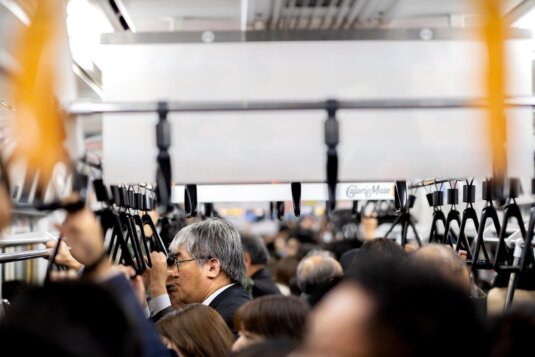
One of the main advantages to shift work is that you rarely have to commute at the same times as office workers. However that can cause a lot of problems. The public transport network is set up for office hours workers and people who don't work. It was not designed for shift workers so how do you get into work for six in the morning if the buses and trains are not running and you don't have a car?
Most shift workers have to drive for this reason, so shifts have to be scheduled around the bus and train network. This means that some shifts have to be longer or shorter to accommodate timetables and they have to be reviewed every six months because the timetables will change. If your shift pattern operates with some odd start and finish time, you may find that the buses were the reason as opposed to any workload requirement.
However driving has problems too. Staying out of the rush hour will always help with commutes, but driving in any condition is always stressful and tiring. This is especially true after a long shift. People who commute for more than one hour have been found to have increased levels of tiredness during a shift.
If you do have a long commute then the best thing to do is arrive at work early and have a five to fifteen minute break. Read a book, listen to music, or just have a cuppa. Then at the end of your shift have another break. Just a few minutes will allow you to rest and recover for the long drive ahead. Then when you do get home you will feel less stressed and more relaxed.
How to Staff for the Workload

Staffing for a given workload is very complicated. Yet covering the workload is the whole point of work. You want people there when they are needed. So how do you do it?
If the workload is flat, that is it doesn’t change from hour to hour, then you can have flat staffing. So you work out how many people you need and ensure that you always have that number. If the workload doesn't require a whole number of people then you either;
  • need to find other work for them to do in the downtime,
  • or understaff,
  • or understaff part of the time,
  • or overstaff and just have people there even when you don't need them.
If the workload changes, you have to decide how to change the staffing levels along with that fluctuation. Do you want that change to happen
  • ahead of the increase and decline after the work starts to reduce,
  • or after the increase and before the decline.


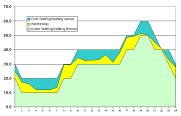
The image above shows a variable workload (yellow). You can either staff under the workload (pale green) and go short or you can overstaff (turquoise) and have people sat around but always know your workload is covered.
It depends what sort of operation you are managing, e.g. complaints line. If you miss a call, it is not going to be the end of the world. So you would staff to the pale green line. However if you were the 999 service, then you need to have someone there to answer the phone. Each missed call is a matter of life or death, so you over staff (turquoise) because the cost of having someone sat around for five minutes twiddling their thumbs is a lot lower than missing a call.
Once you have decided, you need to set up the shifts to match your staffing levels. Saving just one man hour per day is the equivalent of 1/5 of a person. To find out more about staffing to the workload visit our website
Cross Training

Absence is always a problem, any when it occurs you need a way of replacing that person. You can't have everyone knowing how to do everyone's job. Most are too specialised and it would cost a lot in time and training cost. not to mention having to pay higher salaries for these super skilled people. So most companies use Cross Training.


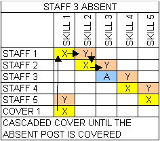
Cross training is where you train all of your staff in two skills. A primary and a secondary skill. By cross training your staff so that they all know at least two skills you can cover for one absence across all skill sets with just one person.

If each person knows two key skills then you replace the missing skill with either the cover person or if their skill does not match then each person in the team moves into their secondary skill set until all of the skills are covered.


The image above shows an absence in skill 3. The cover person can only cover for skill one. Fortunately all of the staff know one additional skill, so the cover person does skill 1, staff member 1 covers skill 2, staff member 2 covers skill 3. In this way all of the skills for the whole group can be covered by one cover person.
For example in a power station there are about 120 skills in the matrix and keeping everyone up to date in all their respective skills is a full time job. Everyone needs regular training and experience in all of their skills. However the benefits out way the costs. It maximises flexibility and ensures that the power station can operate effectively no matter the situation.
How much shift allowance should I pay?
The reason you pay a shift allowance is because you want to keep your workers. If you don't pay them for working unsociable hours , then they will leave, to work for somebody else.


So one option is to see how much your competitors are paying for working similar hours.


Another is by negotiation, you negotiate with the unions to see how much they expect for working these hours. This means that each time you change the shift pattern, you potentially have to renegotiate the shift allowance again.


An alternative option is to calculate the shift allowance. You negotiate what the additional pay should be for each hour of the day and for each day of the week. You then multiply this table by the shifts worked on the shift pattern. This way you only have to negotiate the shift allowance once. Then just reapply the calculation each time you need to change the shift pattern. However you may wish to employ the shift allowance as an incentive for moving on to a new pattern. This approach dictates the shift allowance regardless of the shift pattern. However you can still use one off bonuses for moving shift patterns.


Typical shift allowances start from 5% for a two shift system and can go up to 65% for a fully flexible 24/7 shift operation with holidays included and lots of Banked hours to cover for all absences and short notice changes to their hours. Typically most companies use 25%-35% for a 24/7 operation.


If you are changing shift patterns then we can help you calculate the most appropriate shift allowance for your shift pattern and operational needs. Please contact us via email or phone us on +44 1636 816466
247 Health Care
Before the election David Cameron pledged that we would have full access to the health service seven days a week by 2020. SO with the Conservative party winning we can look forward to a better and more effective health service. Which is excellent news for the country. In 2014 absence cost the UK over £31 billion (PWC). That’s about 2% of our GDP. So if the health service is able to treat people faster and more effectively because it will be operating 24/7 instead of office hours, we should not only be healthier, but also absent less often or for shorter periods.
This is a great opportunity for the NHS to create and use better staffing schedules. This will not only save the tax payer billions through a reduction in agency workers but could also mean better work/life balance for our health care professionals.
So what are the key components in an efficient, low cost, shift schedule for the health service which also gives the shift workers a good work/life balance?
  1. Understand the workload. The workload is key whenever you are creating a shift operation. Your employees are there to cover the work. So you only want them there when there is work for them to do and you want them in the right place, at the right time, with the right skills.
  2. Employ the correct number of staff. There is no point in employing too few. In the long run that just leads to high overtime and agency costs. The Mirror reported that the NHS spent £5.5 billion on agency workers. Now you can’t save your entire overtime and agency budget but if you employee people at basic rate it will normally be a lot cheaper.
  3. What type of service do you need to provide. A key factor in health service operations is continuity of care. So you always need someone each day who was there the day before and will be there tomorrow. That way if there were any developments, each day there would be someone who could pass on the pertinent information to colleagues.
  4. A shift pattern for a good work/life balance. So you need to think about fatigue, time off, commutes, length of shifts, etc.
  5. Absence costs money. A lot of money. So you need a way of covering for absence, be that holidays, sickness or authorised leave. The best way to cover absence is in-house, because your own staff will always know your operation, equipment and staff better than an outsider. Also it is normally cheaper.
If you would like to know more about creating an efficient, low cost shift operation which ensures a good work/life balance for your staff, then contact us directly to find out more.
Created with WebSite X5
About C-Desk Technology

C-Desk Technology helps organisations design and manage fair, efficient shift operations. We provide workforce planning, absence and holiday management, and manager training. Our VisualrotaX tool simplifies complex patterns and delivers clear staffing insights to support better decisions.
More contact details

C-Desk Technology, The Old Vicarage, Rolleston, Newark, England NG23 5SE
Back to content